
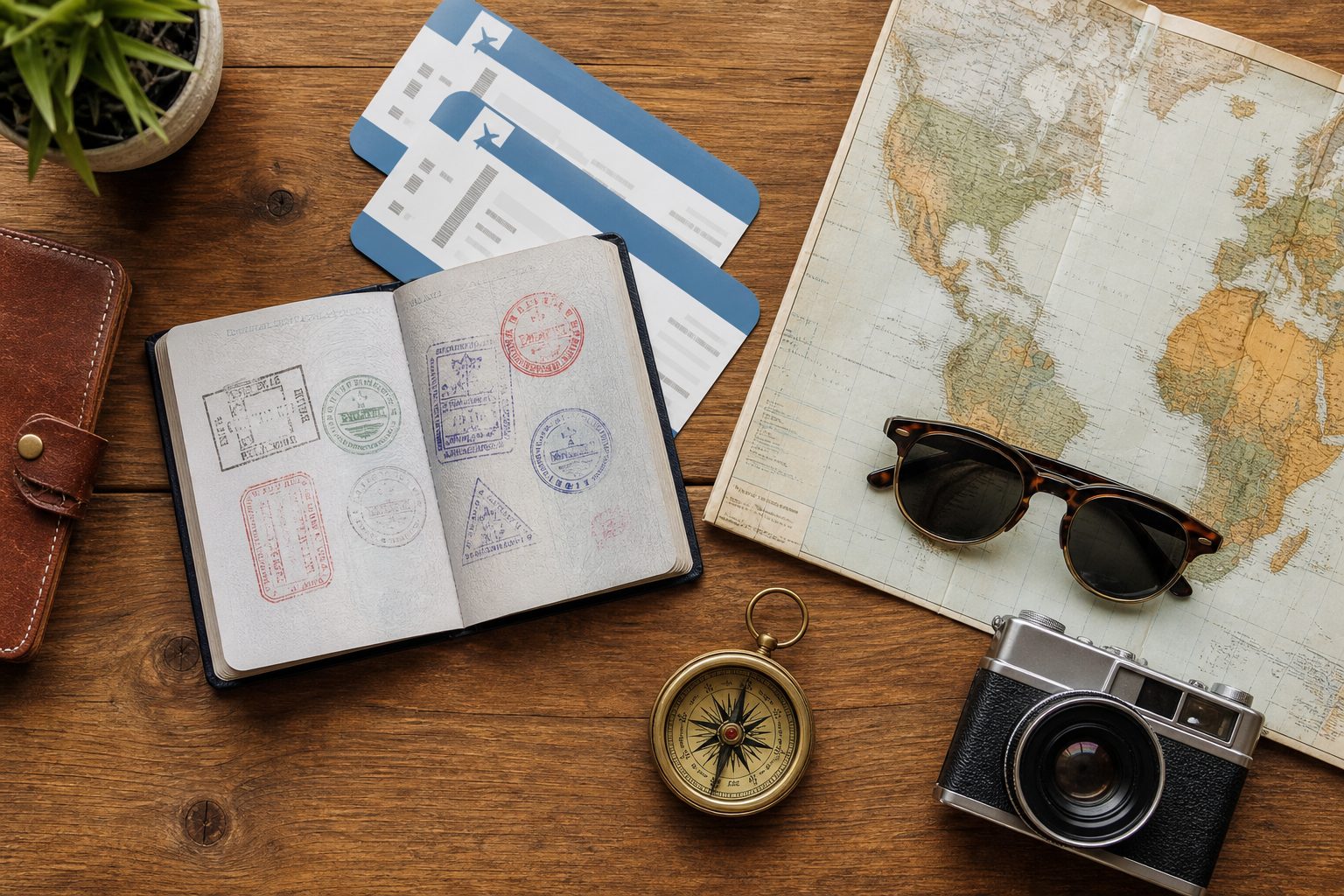
For an American, the passport is a remarkably powerful little book. For most of the destinations a traveller actually dreams about — the capitals of Europe, the beaches of the Caribbean, much of Latin America and great swathes of Asia — you can arrive with nothing more than a valid passport and a smile, get a stamp at the border, and walk out into the country. It is easy, after a few trips, to assume that's simply how travel works. It mostly is. But the ground is shifting, and 2026 is the year a lot of "just turn up" destinations start asking for a little homework first.
This guide does two things. It maps, in broad strokes, where a U.S. passport gets you in with minimal fuss, region by region. And it explains the bigger change every American traveller needs to understand: the rise of electronic travel authorizations — quick, cheap online forms that are not visas but are increasingly mandatory before you board. Miss one and you can be denied boarding at your home airport, deal of a flight or not. The rules change constantly, so treat everything here as orientation, not gospel: the only authority that matters is the official government source for your specific destination, checked close to your travel date.
The one rule that never changes
Always confirm entry requirements on the official government website of the country you're visiting (or the U.S. State Department's country pages) within a few weeks of departure. Requirements shift with little notice, and airlines — not just border officers — enforce them. This article is a map, not a substitute for that check.
The big shift: authorizations are not visas, but you still need them
For years the world divided neatly into "visa required" and "visa-free." A third category has now grown large enough to matter on its own: the electronic travel authorization. These are pre-travel registrations — you fill in a short online form, pay a small fee, and receive electronic permission linked to your passport, usually within minutes to a few days. They are not visas; they don't involve an embassy or an interview. But they are mandatory, and they exist precisely for travellers who were previously visa-free.
Several major destinations have introduced or are introducing systems of this kind, and Europe's long-planned scheme for visa-exempt visitors is the one most likely to catch Americans off guard, because Europe has felt like the definition of "just go" for so long. The details and start dates have moved more than once, which is exactly why you must check close to departure rather than relying on what was true the last time you flew. The pattern, though, is clear and spreading: the friction is moving from the border to a form you complete before you leave.
"The mental model to retire is 'visa-free means no paperwork.' The new model is 'visa-free often means a five-minute form and a small fee — done in advance, or you don't board.'"
Region by region (in broad strokes)
Europe
For short tourism and business stays, Americans have long enjoyed straightforward visa-free access to the Schengen Area and much of the wider continent, typically capped at 90 days within any 180-day period. That underlying access remains, but the new pre-travel authorization for visa-exempt visitors is the headline change to watch; budget a few minutes and a small fee to register before your trip once it's in force, and never assume your last trip's rules still apply. The 90/180 day limit also trips people up on longer or multi-trip itineraries — count carefully.
The Americas and the Caribbean
This is the easiest region for U.S. travellers. Most of Latin America and the Caribbean welcomes Americans visa-free for tourism, often for generous stays, with a passport stamp on arrival and little more. A handful of countries levy a tourist card or reciprocity fee, sometimes collected online beforehand and sometimes at the airport, so check whether your specific destination wants a small payment in advance. Canada uses an electronic authorization for air arrivals by many nationalities; rules for U.S. citizens differ, so verify before you fly.
Asia and the Pacific
Asia is a patchwork, and it's where checking pays off most. Many popular destinations are visa-free or offer visa-on-arrival for Americans; several now run e-visa or electronic authorization systems you complete online before departure; and a few still require a traditional visa arranged ahead of time. Permitted stays vary widely. The good news is that the online systems are generally fast and inexpensive; the catch is that "visa-on-arrival" and "e-visa needed in advance" look similar until the moment you're denied boarding for not having sorted the latter.
The Middle East and Africa
Hugely variable. Some Gulf and North African destinations are easy — visa-free or a simple visa-on-arrival or e-visa. Others, across both regions, require visas arranged in advance, occasionally with supporting documents. If your itinerary includes this part of the world, research each country individually and early, because a few have processing times measured in weeks, not minutes.
Pre-trip paperwork checklist
- Passport validity. Many countries require six months' validity beyond your travel dates. Check yours early — renewals take time.
- Blank pages. Some borders still want one or two empty pages for stamps.
- Authorizations, done in advance. Identify whether your destination needs an e-visa or electronic authorization, and apply only through the official site.
- Onward/return ticket. Many visa-free entries technically require proof you'll leave; airlines sometimes ask.
- The 90/180 maths. For Europe especially, tally your days across all recent trips, not just this one.
- Copies. Keep a photo of your passport and any authorization on your phone and somewhere offline.
Beware the official-looking middleman
One practical warning that saves travellers money and grief: when a destination introduces an electronic authorization, a swarm of unofficial websites appears alongside it, designed to look official, charging a hefty "service fee" to submit a form you could complete yourself for a fraction of the cost. Always start from the actual government domain. If a site's price seems high, its design seems pushy, or it's buying its way to the top of your search results, close the tab and find the official source. The real systems are cheap by design; anyone charging a premium is selling you the act of typing.

How this changes your planning
The upshot is a small but real shift in habit. The moment you commit to a destination — ideally before you book non-refundable flights — spend ten minutes confirming exactly what it wants from your passport: nothing, a stamp on arrival, a quick online authorization, or a full visa with lead time. Build that lead time into your plan for the few places that need it. For the great majority of trips a U.S. traveller takes, the answer is still gloriously simple, and the form, where one exists, is a minor errand. But "I assumed it was visa-free" is now one of the more expensive sentences in travel, and it's entirely avoidable.
None of this should put you off. A U.S. passport remains among the most travel-friendly documents on earth, and the new authorizations, irritating as they are, are quick and cheap compared to the old world of embassy queues. The skill is simply knowing which category your destination falls into, and handling the paperwork before you're standing at a gate. Do that, and the world stays about as open as it has ever been.
Know where you're going?
Price the flights first — compare 700+ airlines and agencies in one search — then sort the paperwork with time to spare.
Open the fare finder ✈