Japan has a crowding problem, and it is concentrated with almost comic precision. A handful of districts in Tokyo and Kyoto now absorb so many visitors that the experience tips, at peak times, from magical into a slow shuffle through other people's selfies. The locals feel it; the famous shrines feel it; you feel it, standing in a queue for a photograph of serenity. And yet, twenty minutes down the rail line in almost any direction, the country empties out into cities that offer the very things you came for — the craft, the food, the temples, the quiet — with room to actually experience them.
This is the great open secret of travelling Japan well: the second cities are not a consolation prize. They are, very often, the better trip. The country's extraordinary rail network means they are absurdly easy to reach, and because tourism clusters so tightly around a few headline names, the places just beyond that cluster remain genuinely lived-in rather than performed for visitors. This is a field guide to that calmer Japan, and to the simple mindset shift that unlocks it.
Why the crowds cluster so tightly
It helps to understand the mechanism, because it tells you exactly how to beat it. First-time itineraries are remarkably uniform: Tokyo, the bullet train to Kyoto, perhaps Osaka, and home. Guidebooks, films and social media all reinforce the same short list, and so the same few square kilometres receive a staggering share of all foreign visitors while the rest of a large, dense, deeply rewarding country goes comparatively untouched. The crowding isn't a sign that Japan is full. It's a sign that everyone is standing in the same three places.
The corollary is liberating. You do not need to go somewhere obscure or hard to reach to escape the crush — you need only step off the standard track. The second-tier cities are large, sophisticated and superbly connected; many would be marquee destinations anywhere else. They simply lack the one or two globally famous sights that funnel the crowds, and so they keep their composure.
"In Japan the distance between a mobbed street and an empty, equally beautiful one is often a single train stop. Almost nobody takes it. That stop is the whole trick."
What the second cities give you
The same craft, without the queue
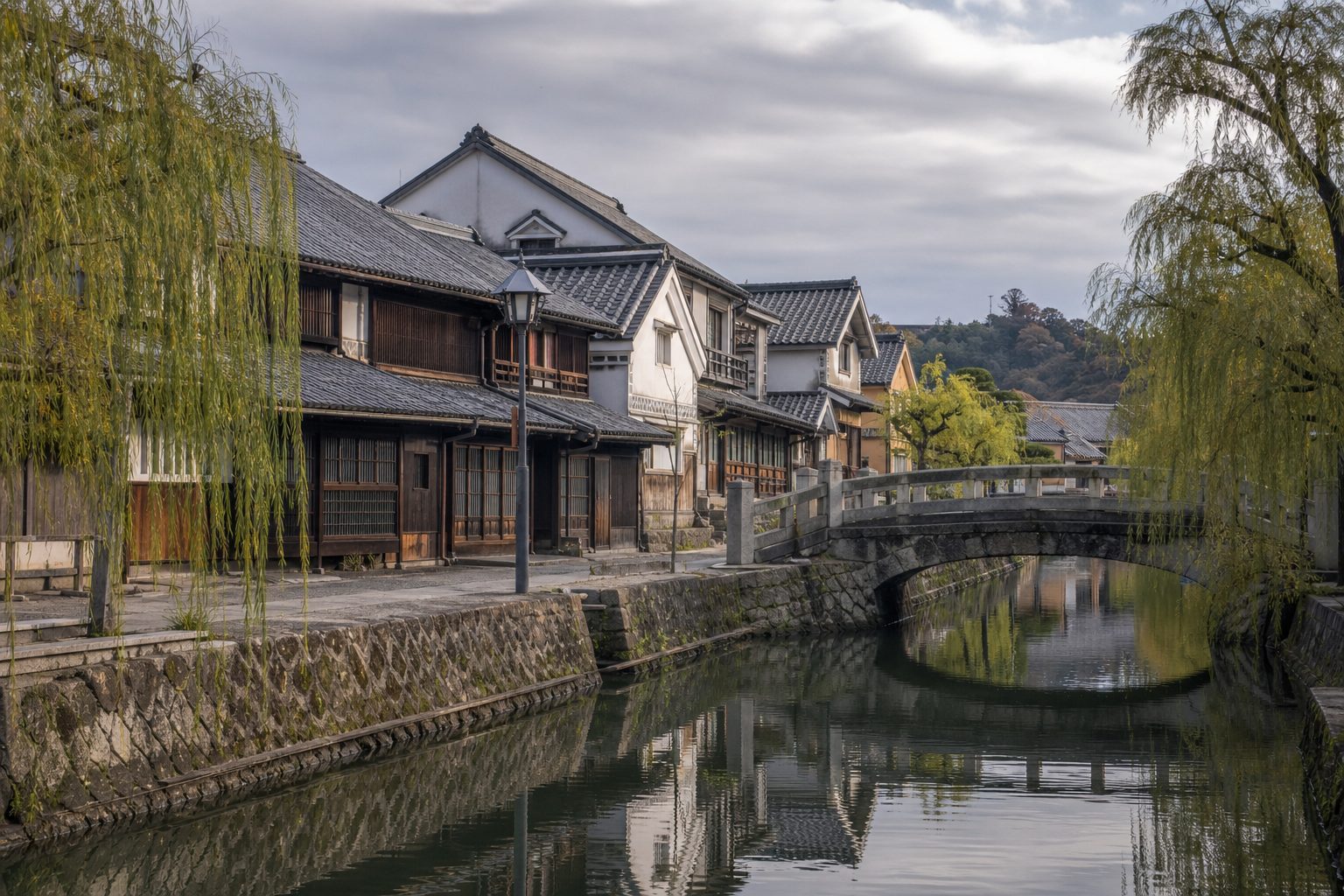
The traditional arts that draw people to Kyoto — the tea culture, the gardens, the temple architecture, the artisan workshops — are not unique to it. Cities across the country carry the same heritage, often with a distinct regional character and almost no line to get in. You can stand in a centuries-old garden with only the sound of water and gravel, instead of jostling for a sightline. The craft is the same; the experience of it is transformed by the absence of three hundred other people.
Regional food cultures
Japan's cuisine is fiercely regional, and the second cities are where that comes alive. Each has its own specialities, its own market, its own way of doing the dishes you thought you knew — and prices that haven't been bid up by tourist demand. Eating your way through a provincial city, guided by what's local rather than what's famous, is one of the great pleasures of the country and one almost entirely missed by the standard itinerary.
Actual daily life
Perhaps the biggest gift is texture. In the over-touristed districts you are a visitor among visitors, and the place arranges itself around that. In the second cities you are a guest in a working town — shopkeepers, students, salarymen, grandparents — and the encounters that result are warmer, stranger and more memorable than anything that happens in a queue. This is where the trips people talk about for years actually take place.
The one-stop-further heuristic
Whatever famous place is on your list, ask: what's the substantial city near it that people skip on the way? Base yourself there, day-trip to the headline sight early or late to dodge the crush, and spend the rest of your time somewhere that still belongs to its residents. You get the icon and the calm.
How to build a quieter itinerary
You don't have to abandon the classics to travel this way; you have to rebalance. A practical structure that works for most first or second trips:
- Anchor lightly in the big names. Give Tokyo and Kyoto a couple of nights each if it's your first time — they earn it — but resist the urge to make them the whole trip.
- Pick one or two second cities to actually stay in. Not day trips: nights. Waking up and going to sleep in a less-touristed city is what changes the texture of the journey.
- Use the rail pass logic. Japan's trains make hopping between cities effortless and fast; build your route around the network and the second cities fall naturally into place between the famous stops.
- Time the icons. When you do visit a mobbed sight, go at opening or near closing. The same temple at 8am and at noon are different planets.
- Leave unscheduled days. The best discoveries in provincial Japan are accidental — a festival, a market, a street of workshops you wander into. Don't book every hour.
Practical notes for the quieter route
Going off the standard track
- Carry some cash. Smaller cities and family-run places are still more cash-friendly than the card-everywhere big-city core.
- Learn ten words. English thins out away from the tourist centres, and a little effort goes a very long way; people are extraordinarily kind to those who try.
- Book ryokan and small inns ahead. The best small-town accommodation has few rooms and loyal regulars.
- Use coin lockers and luggage forwarding. Japan's brilliant baggage-forwarding services let you travel light between cities while your suitcase meets you at the next hotel.
- Check local festival calendars. A provincial festival is the single best reason to be in a second city, and timing your visit to one is travel gold.
- Respect the quiet. Part of why these places stay lovely is restraint — keep your voice down, follow local cues, and leave them as you found them.
The case for going further
None of this is a knock on Tokyo or Kyoto. They are among the world's great cities and worth every traveller's time. But they are no longer secrets, and at peak season they can no longer give you the thing — that particular Japanese sense of order, beauty and calm — that you flew across the world to feel. The second cities still can. They ask only that you treat the famous list as a starting point rather than the whole map, and that you take the train one stop further than the crowd.
Do that, and Japan rearranges itself. The queues become quiet streets. The performed culture becomes lived culture. The country stops feeling like a place you're visiting and starts feeling like one you're briefly part of. That shift — from spectator to guest — is the entire reward, and it's hiding in plain sight, one easy train ride past where everyone else gets off.
Ready to go further?
Compare fares to Japan across 700+ airlines and agencies, then let the trains take you past the crowds.
Open the fare finder ✈