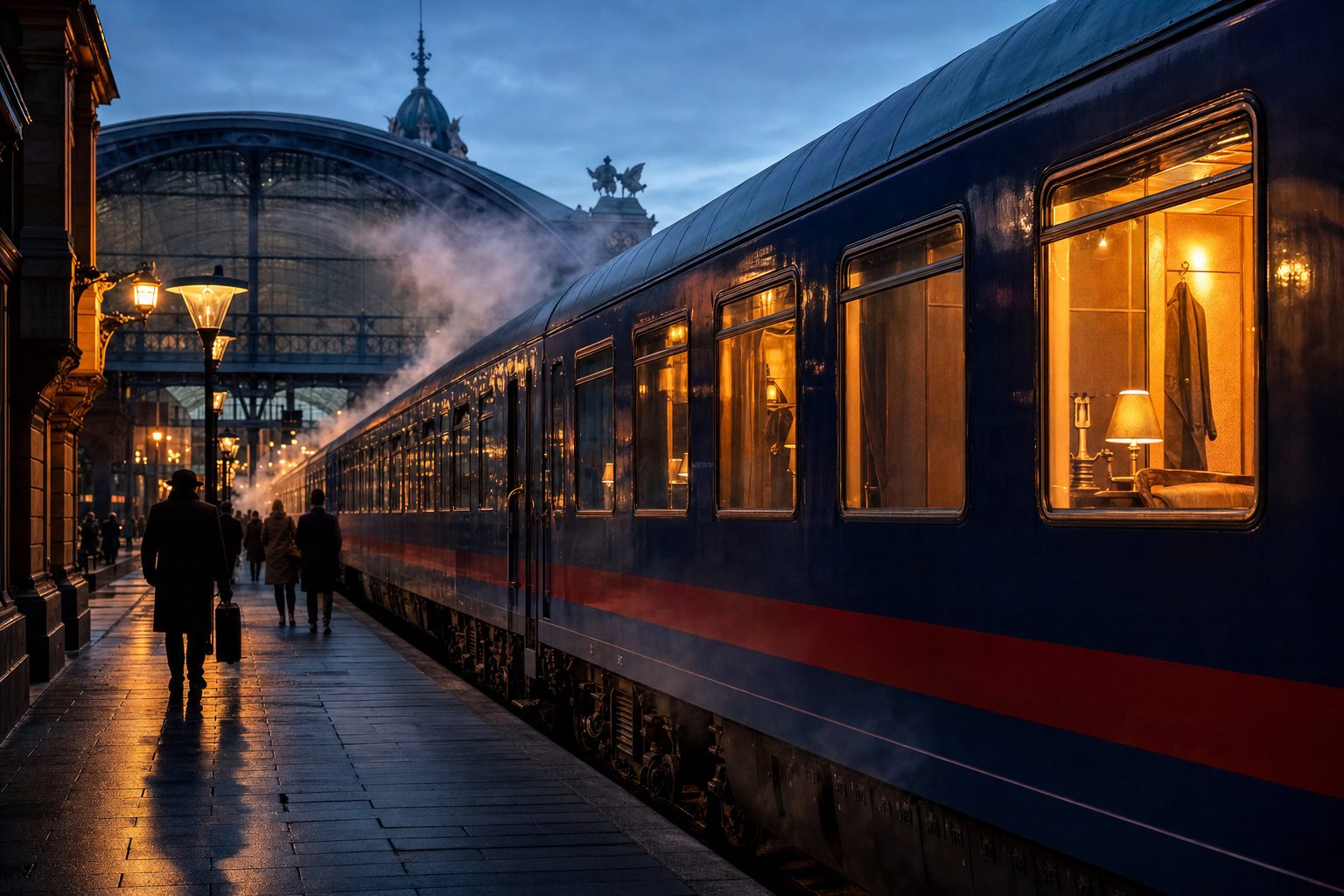
There is a specific kind of dread that the word "layover" still summons: four fluorescent hours on a bench built to discourage lying down, a bag between your feet, a single overpriced sandwich, and the slow realisation that the airport was designed to move you through it, not to hold you in it. For seventy years that was simply what flying felt like on the ground. But walk through the newest terminals opening from Singapore to Salt Lake City and something has shifted. The airport, of all places, is trying to become somewhere you want to be.
This is not a story about luxury lounges for the few. It is a story about a quiet rethinking of the busiest buildings most of us ever pass through — what they are for, who they serve, and whether the hours we spend in them have to be dead time. The shift has a few clear causes, some obvious commercial logic, and a handful of genuine lessons for anyone who flies. We spent several weeks talking to terminal designers, airport planners and the people who run the concessions, and the through-line surprised us: the best new airport ideas are mostly about giving time back to passengers rather than extracting money from them.
How the terminal lost its way
To understand the change you have to understand how airports became so grim in the first place. The post-war boom in air travel produced terminals built around a single imperative: throughput. Get the maximum number of bodies from curb to gate, process them, and turn the gate around for the next flight. Everything else — comfort, light, dignity, even basic wayfinding — was subordinate to the conveyor logic of moving people like freight.
Then, in the 1980s and 1990s, a second imperative arrived: retail. As airlines squeezed their margins, airports discovered that a captive traveller with time to kill is a remarkably reliable shopper. The "dwell time" between security and boarding became a commercial asset to be maximised, and terminals were redesigned to funnel everyone through duty-free halls laid out with the same behavioural cunning as a casino floor. The gate seating got worse, not by accident, but because a passenger comfortably seated is a passenger not spending.
"We spent thirty years optimising airports for two things — throughput and retail spend per head. Comfort wasn't even measured. You can't improve what you don't measure."
The result was the airport we all learned to hate: bright, loud, short on seats and shorter on daylight, with water fountains hidden behind the shops and power outlets treated as a scarce luxury. It worked, in the narrow sense that it moved people and sold things. But it also produced a building almost universally disliked by the people who use it — a strange achievement for an industry that sells the romance of travel.
The turn toward time, light and calm
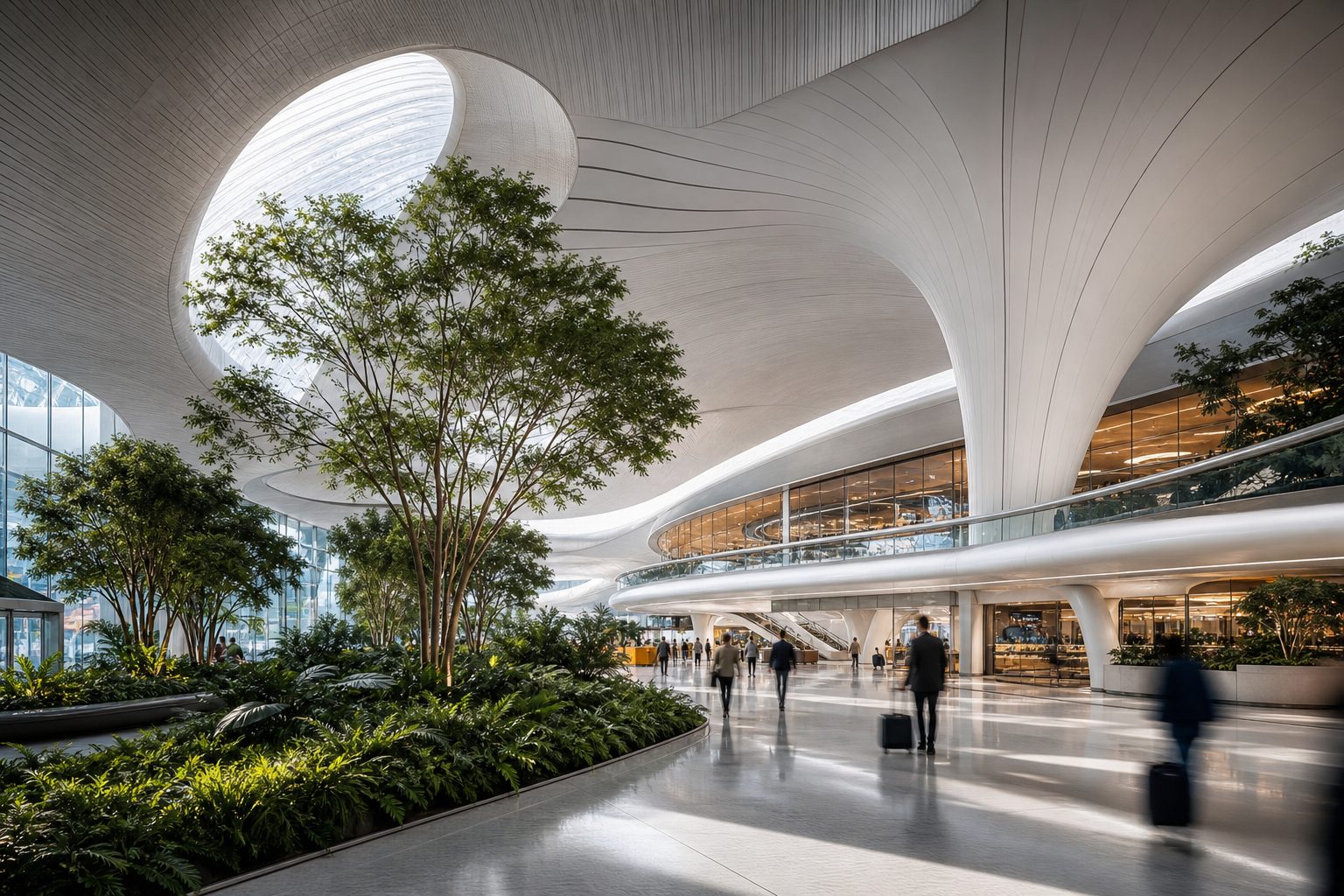
The reaction, when it came, was led less by airlines than by the airport authorities themselves, many of them publicly owned and increasingly judged on passenger satisfaction scores rather than retail revenue alone. A handful of Asian and Middle Eastern hubs set the template — vast, plant-filled halls flooded with natural light — and the idea travelled. What unites the new thinking is a reversal of the old priorities. Where the legacy terminal treated the passenger's time as something to be filled with spending, the new terminal treats it as something to be eased.
In practice that means a few recurring moves. Daylight comes first: deep skylights and full-height glazing replace the windowless retail canyons, because designers finally accepted what every traveller already knew — that a building you can orient yourself in by the position of the sun is a building that lowers your blood pressure. Greenery comes next, and not as a token planter or two. The most ambitious terminals now build interior gardens, living walls and even small forests under the roof, partly for the air and acoustics, mostly because a tree does something to a stressed human that a sign promising calm never will.
The new terminal checklist
When a new hall is praised by the people who use it, it almost always has the same five things: abundant daylight, real greenery, generous free seating away from the shops, plentiful power and water, and at least one genuinely good local place to eat. Notice how little of that is about luxury — and how much of it the old airports actively removed.
The amenities that actually matter
Talk to enough frequent flyers and a clear hierarchy of what improves an airport emerges, and it is rarely the flashy stuff. The infinity pools and indoor waterfalls make the photographs, but the things that change a travel day are mundane and almost free: enough seats that you don't have to sit on the floor; power at every one of them; water you can refill without hunting; bathrooms cleaned often enough to trust; and signage clear enough that you never feel lost. Airports that nail these unglamorous basics score higher with passengers than airports that spend a fortune on a signature sculpture and skimp on the seating.
Above that baseline sit the amenities that turn a long connection from an ordeal into something tolerable, even pleasant. Showers, once the preserve of business-class lounges, are appearing in paid, by-the-minute form for everyone — a transformative thing after an overnight flight. Quiet rooms and nap pods give you somewhere to actually rest rather than slump. Children's play areas, properly designed, save the sanity of every parent and every passenger seated near them. And then there is food.
The end of the captive-audience meal
For decades airport food operated on a simple, cynical premise: you are hungry, you cannot leave, and there is no competition, so the bar can be low and the price high. The single most visible change in the new terminals is the assault on that premise. Forward-thinking airports now court the same independent restaurants, bakeries and coffee roasters that people queue for in the city, sometimes with "street pricing" clauses in the lease that forbid charging more inside the terminal than outside it. The logic is commercial as well as kind: a genuinely good local restaurant is now a reason to choose a connection through that airport, and a story passengers tell.
Who pays for the garden?
None of this is charity, and it is worth being clear-eyed about the economics. Interior forests and daylight halls are expensive, and that money comes from somewhere — ultimately from landing fees, retail concessions and, indirectly, your ticket. The optimistic reading is that comfort and commerce have stopped being opposites: a relaxed, well-fed passenger with time and a pleasant place to sit spends more, not less, and chooses to route through that hub again. The best new terminals have simply discovered that treating people decently is, over a long enough horizon, also good business.
There is a less rosy reading, too. Some of the headline projects are effectively luxury malls with runways attached, where the "experience" is really just a more sophisticated machine for separating travellers from their money, and where the genuinely useful free amenities remain as scarce as ever behind the spectacle. The test we'd apply, as travellers: does the building give you somewhere comfortable to exist without spending a cent? If yes, the garden is a gift. If no, it's set dressing.
Make any layover better — a field guide
- Map it before you land. Most big airports publish a terminal map with amenities; a two-minute look tells you where the quiet seating, showers and good food actually are.
- Walk away from the gate. The crowding and the worst seating cluster near departure gates. Calm, space and better food are usually one concourse over.
- Carry an empty bottle. Refill stations are now standard. It's free water and one less thing to buy.
- Know the lounge options. Many lounges sell day passes, and some travel cards include access. For a long connection it can cost less than two airport meals.
- For overnight connections, look up whether the airport has a transit hotel, sleep pods or a designated quiet zone before you resign yourself to a bench.
What it means for how you fly
The practical upshot of all this is that the airport is becoming a variable worth weighing, not just a box to pass through. A connection that once felt like pure cost — two dead hours to avoid at any price — can now be a feature, if it routes you through one of the terminals that has figured this out. We are not suggesting you plan a holiday around a layover. But when the fares are close, the quality of the airports on either end of a connection is a perfectly rational tiebreaker, and an increasingly large one.
It is also, quietly, a hopeful story. The airport was the building that the modern world seemed to have collectively given up on — too big, too commercial, too captive an audience to bother making humane. That even a few of them are being rebuilt around daylight, greenery and the simple dignity of a comfortable seat suggests the logic of "endure it" was never inevitable. It was a choice. And it is being un-made, one terminal at a time.
Flying through somewhere new?
Compare fares across 700+ airlines and agencies, then pick the routing that puts you through the better airport.
Open the fare finder ✈