There is a moment, somewhere on the third day of an Iceland trip, when you realise you are part of a herd. You pull into the same waterfall car park as forty other rental cars, queue for the same photograph, eat the same overpriced soup, and rejoin the same clockwise convoy along the famous Ring Road. It is all genuinely spectacular — Iceland could not be otherwise — and yet you have the nagging sense that the real country is happening just out of frame, down the gravel turnoffs you keep driving past. It is. And reaching it is easier than the herd assumes.
The Ring Road — the paved highway that loops the island — is one of the great drives on earth, and we would never tell a first-timer to skip it. But it is also a kind of comfortable rail, and the overwhelming majority of visitors never leave it. Step off, onto the peninsulas and gravel roads and the empty interior, and the crowds evaporate within minutes. This is a field guide to that Iceland: where to peel away, what you'll find, and the honest practicalities of reaching the parts of the country that still feel like the edge of the map.
The Westfjords: the Iceland that time forgot
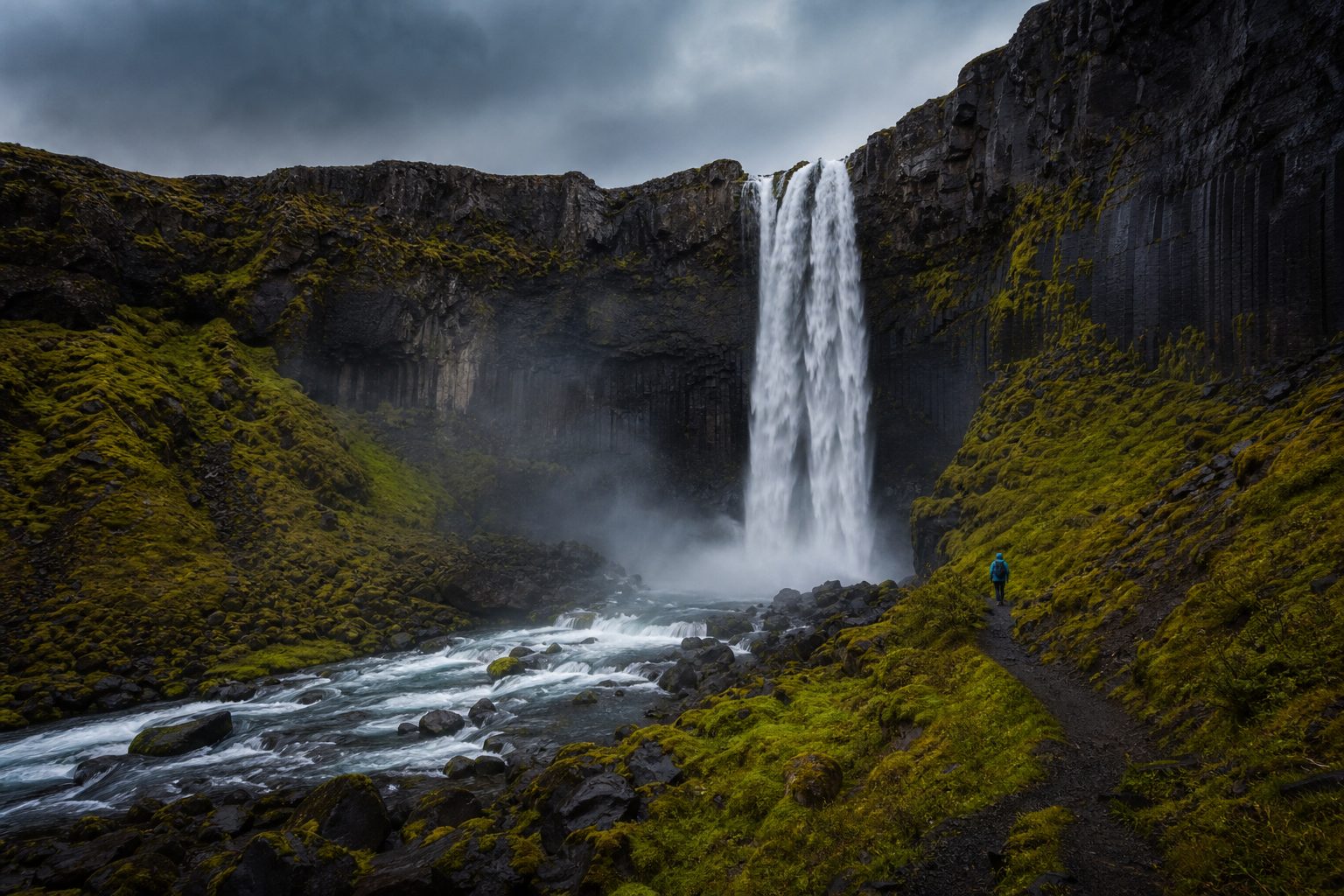
If you do only one thing differently, drive into the Westfjords. This great clawed peninsula in the northwest is, by any measure, among the most dramatic landscapes in the country — and because it sits off the Ring Road and takes real effort to reach, it receives a tiny fraction of the visitors. The roads thread along fjord after fjord, climbing over passes and dropping to sea-level villages where the population is counted in dozens. Waterfalls tumble in tiers. Sea birds wheel off thousand-foot cliffs. And for long stretches you will not see another car.
The trade-off is time and road surface. Distances that look short on the map take hours, because the road hugs every indentation of the coast rather than cutting across, and stretches remain gravel. This is not a detour to bolt onto a tight itinerary; it deserves three or four days of its own. But for travellers willing to give it that, the Westfjords deliver the single biggest gap between effort and reward in the country — wilderness on an enormous scale, with the volume turned all the way down.
"You can measure your distance from the crowds in Iceland almost exactly by the road surface. The asphalt has the tour buses. The gravel has the country."
The empty east
The eastern fjords occupy an awkward spot in most itineraries — they're the long, sparsely populated stretch people hurry through to get between the south coast and the north — and that neglect is exactly their appeal. Here are tiny fishing towns wedged between mountain and sea, reindeer on the high ground, and a pace that feels a world away from the booked-out south. Slowing down here, staying a night in a town most people only drive through, is one of the easiest ways to feel like you have the country to yourself, and it costs nothing but the willingness not to rush.
The highlands: the true interior
For the most committed travellers, the interior highlands are the prize. This is the barren, otherworldly heart of the island — a high desert of ash and rhyolite mountains, glacial rivers and hot springs, with no permanent population and no paved roads. It is open only in the short summer window, reachable only by the rugged mountain "F-roads," and parts require fording rivers, which means a suitable vehicle and real care. But the reward is a landscape so stark and strange it has stood in for the surface of other planets, and the profound quiet of somewhere genuinely beyond infrastructure.
We want to be clear-eyed about this one: the highlands are not a casual outing. They demand the right vehicle, attention to weather and river conditions, and respect for how quickly things change. Done carelessly they are dangerous and you can wreck a rental fording a river you had no business attempting. Done properly — with the right car, a checked forecast, and humility about turning back — they are the most extraordinary driving in Iceland, and the emptiest.
The road-surface rule
Iceland's roads are graded by how demanding they are. Paved highways suit any car. Gravel side roads suit most, driven slowly. The "F-roads" of the interior legally and practically require a 4×4, and some involve unbridged river crossings that rental contracts specifically exclude. Match your vehicle to your ambitions before you book, not after.
Smaller peels off the loop
You don't have to commit to the Westfjords or the highlands to escape the crowds. Some of the best value comes from short detours the convoy ignores. The Snæfellsnes peninsula, sometimes called "Iceland in miniature," packs a glacier-topped volcano, black beaches, lava fields and fishing villages into a compact, fully paved loop, yet feels far quieter than the south coast. The Reykjanes peninsula near the airport — the first and last land most visitors touch — is treated as a transit zone and consequently overlooked, despite its raw volcanic terrain and geothermal drama. And almost anywhere, taking the turn marked with a place name you don't recognise, and following it to its end, tends to deliver the day's best memory.
The practicalities nobody mentions
A few hard-won notes for travelling beyond the Ring Road, where the margins for error are thinner.
- Fuel up compulsively. Off the main loop, stations are far apart and some are unmanned card-only pumps. Never let the tank drop below half in remote regions.
- Check the road and weather portals daily. Iceland publishes live road conditions and forecasts; in the Westfjords and highlands these are not optional reading. Roads close, and weather turns violently and fast.
- Respect the closures. Interior roads open and close by season and conditions, not the calendar. A road being shut is information, not a challenge.
- Carry food and water. Services thin out dramatically. Don't assume a hot meal is ever an hour away.
- Stay on the tracks. Off-road driving is illegal and scars the fragile landscape for decades. The rule is absolute, and locals will not forgive it.
- Book remote beds ahead. The few guesthouses in sparse regions fill, precisely because there are so few. Spontaneity works less well the further you roam.
How to build the itinerary
- One week: Ring Road highlights plus one deliberate detour — Snæfellsnes or the eastern fjords — to taste the quiet.
- Ten days: Add the Westfjords as a proper three-to-four-day arm of the trip. This is the sweet spot.
- Two weeks-plus, summer only: Fold in a highlands crossing with the right vehicle, treating it as the centrepiece rather than an add-on.
- Any length: Build in slack. Iceland punishes over-packed schedules; the best moments are the unplanned turnoffs.
Why it's worth the effort
The case for leaving the Ring Road is not snobbery about crowds. It's that Iceland's defining quality — the sense of standing somewhere vast, raw and indifferent to you — is precisely the thing that a car park full of tour buses dissolves. You cannot feel the scale of a place while queuing for a photo of it. Drive an hour past where the convoy stops, switch off the engine, and step out into the wind and the enormous silence, and the country finally does to you what it came to do. That feeling is the whole reason to fly to the edge of the Arctic, and it is waiting, reliably, just past the end of the pavement.
Planning the trip north?
Compare fares to Reykjavík across 700+ airlines and agencies, and start your loop — or your escape from it.
Open the fare finder ✈